When your agent claims damage on move-out, Tenantly is the evidence you recorded on move-in. Ten minutes of walkthrough. A record that holds up at VCAT.
Your bond. Your evidence. Your win.
Agents have property-management software that timestamps every action. Renters have a phone, a memory, and 14 days to contest. Tenantly closes that gap — at move-in, when the evidence still exists.
Things that went wrong in one tenancy, all documented — none fixed:
Tenantly is the tool I wish I’d had on day one.
Most tenancy apps start at the dispute. Tenantly starts on day one, and carries one record from move-in to tribunal.
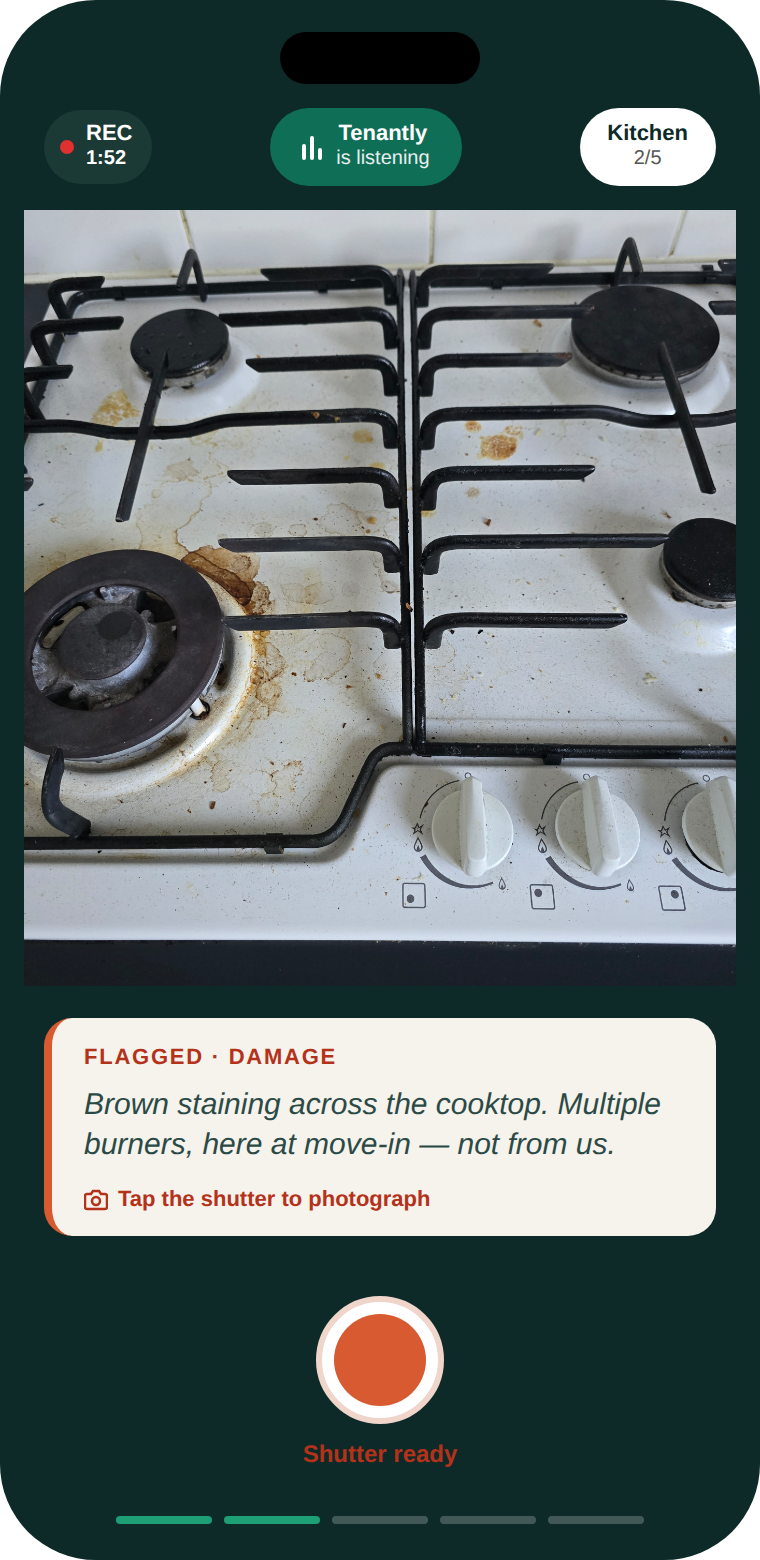
Hold up your phone, walk through each room, describe what you see: “Brown staining across the cooktop — multiple burners, here at move-in, not from us.” Tenantly transcribes, flags damage, and prompts you to photograph the exact moment.
On-device speech recognition. Timestamped. GPS-verified. Your condition report is saved as a PDF — ten minutes, done.
Why this matters at move-out: When the agent later claims a “professional clean” fee, your walkthrough is already on the record. Under RTA 1997 s63 and CAV Guideline 3, a renter’s duty is to leave the property reasonably clean, taking into account the condition at the start of the tenancy — not to restore it beyond that.
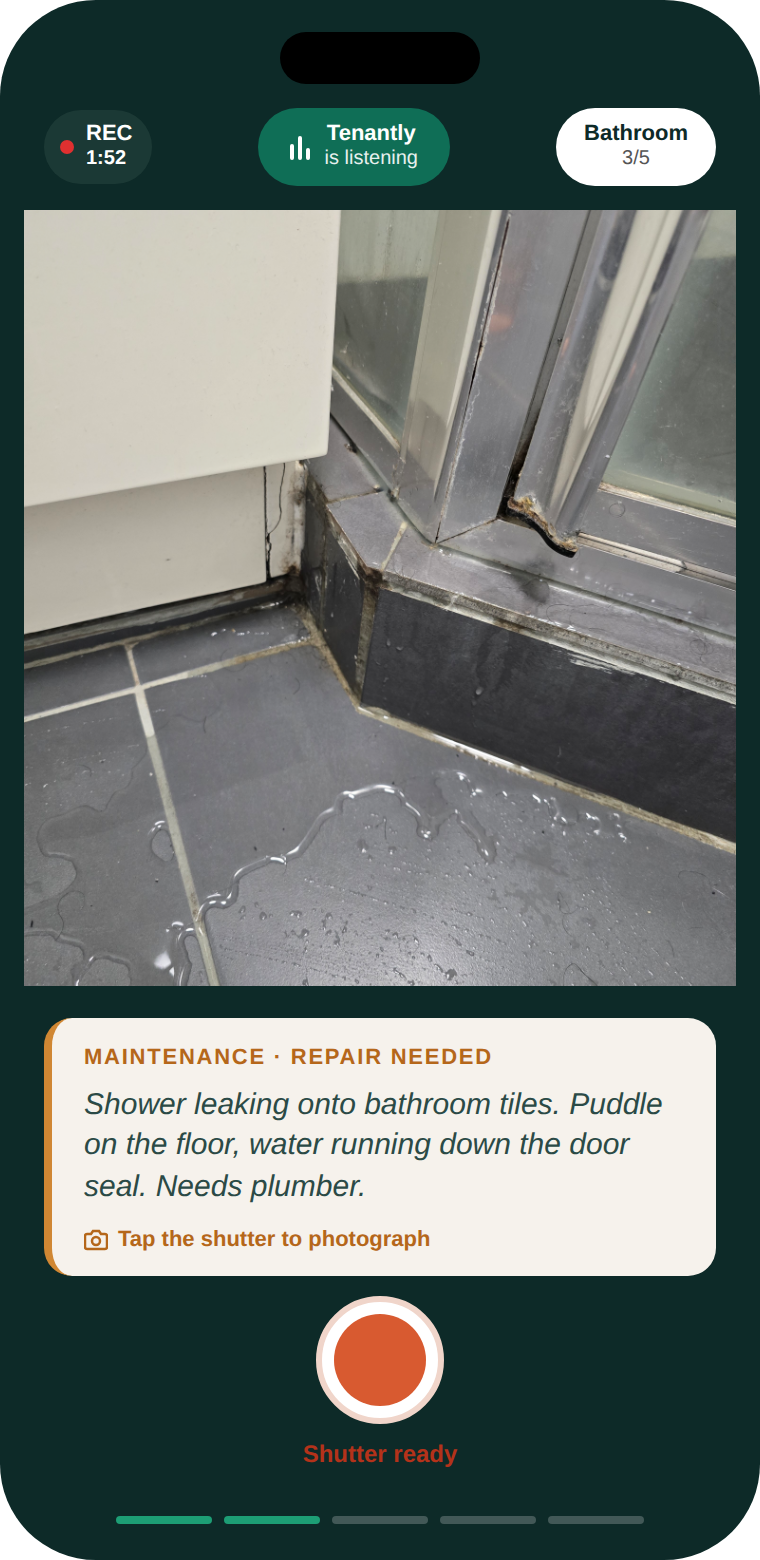
Something goes wrong mid-tenancy. Photograph it, describe it: “Shower leaking onto bathroom tiles. Puddle on the floor, water running down the door seal. Needs plumber.” Tenantly drafts the email to your agent and CCs evidence@tenantly.com.au — the repair request is on the record the moment you send it.
Every agent reply is added to a searchable timeline. You’re not starting from a blank email at midnight.
Why this matters if the agent stalls: Under RTA 1997 s68, the rental provider must maintain the premises in good repair. s72 sets statutory deadlines for urgent repairs. Your timestamped request is the evidence that the clock has been running — not starting only when it suited the agent.
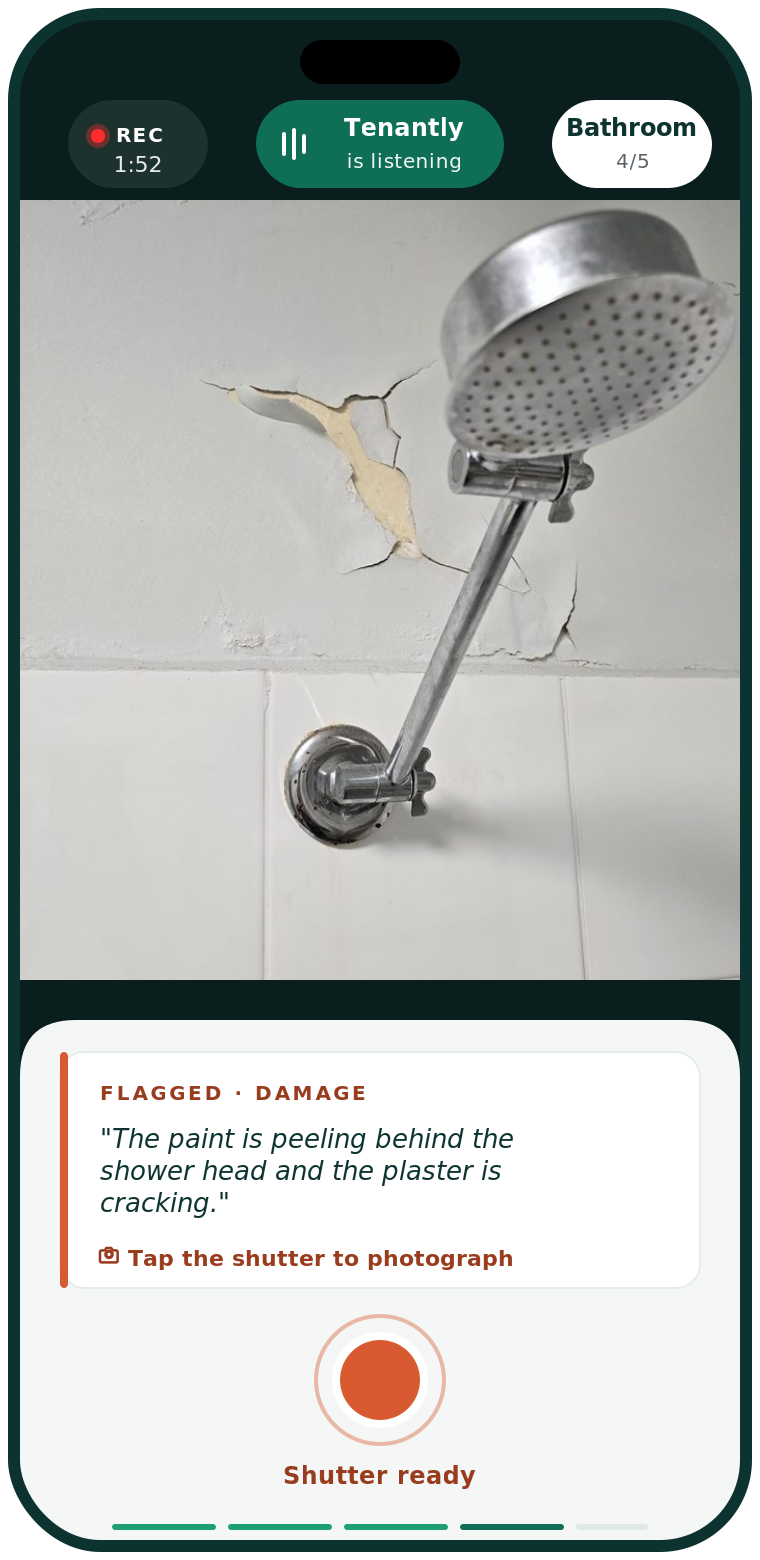
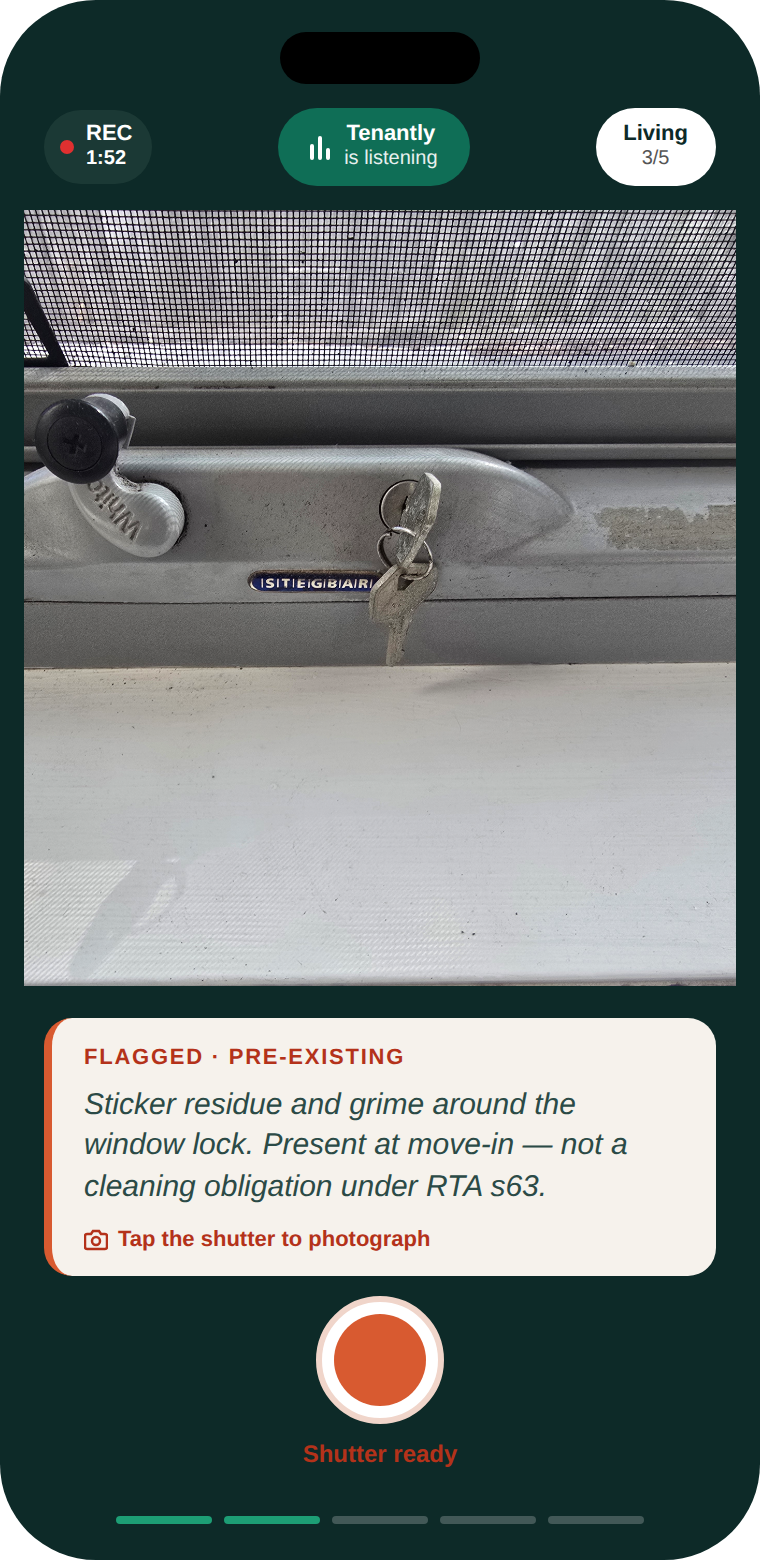
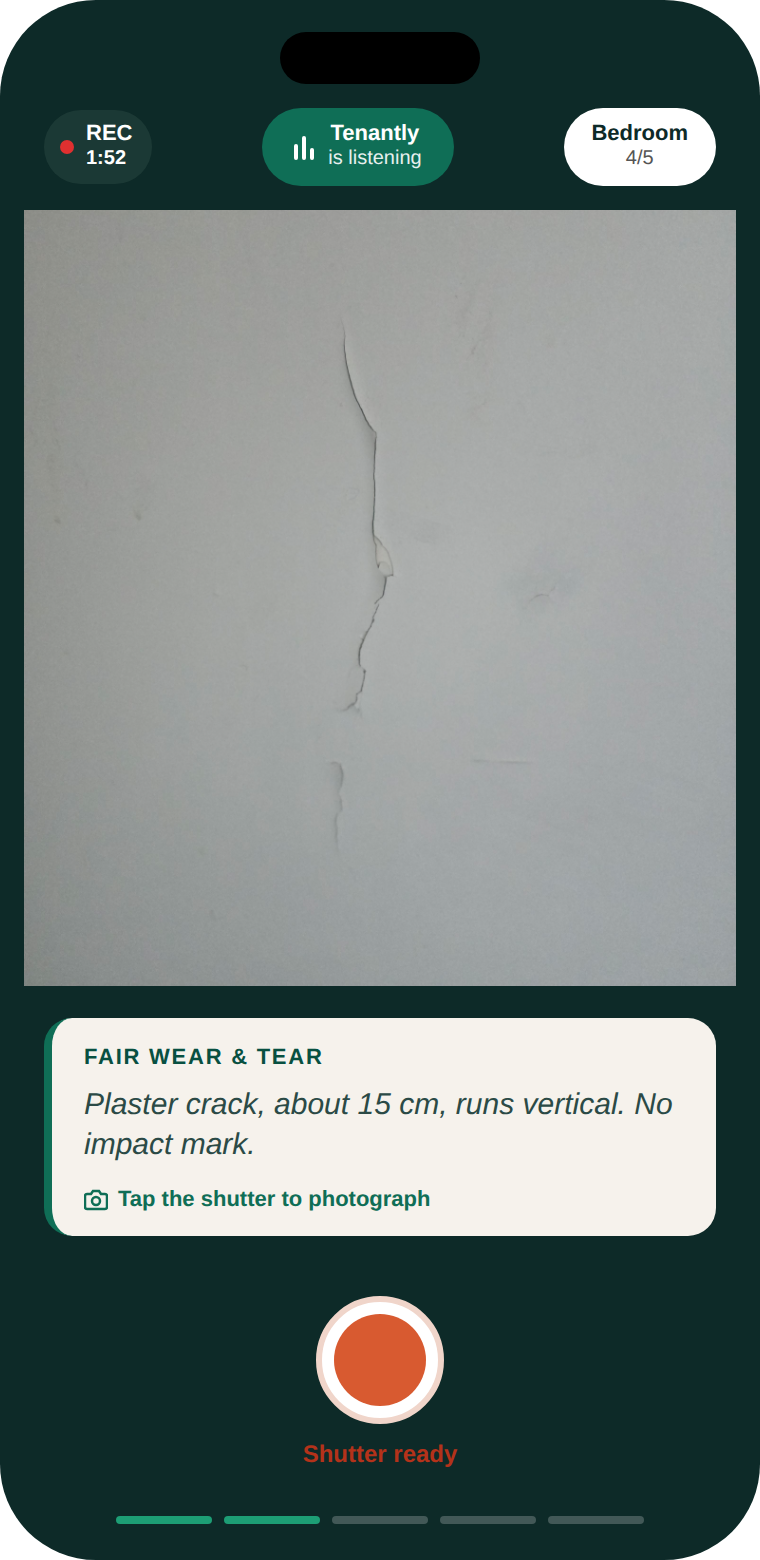
The agent claims the bond for things like sticker residue around the window lock or a cracked wall. Your bundle rebuts each claim with a single source: the Act itself.
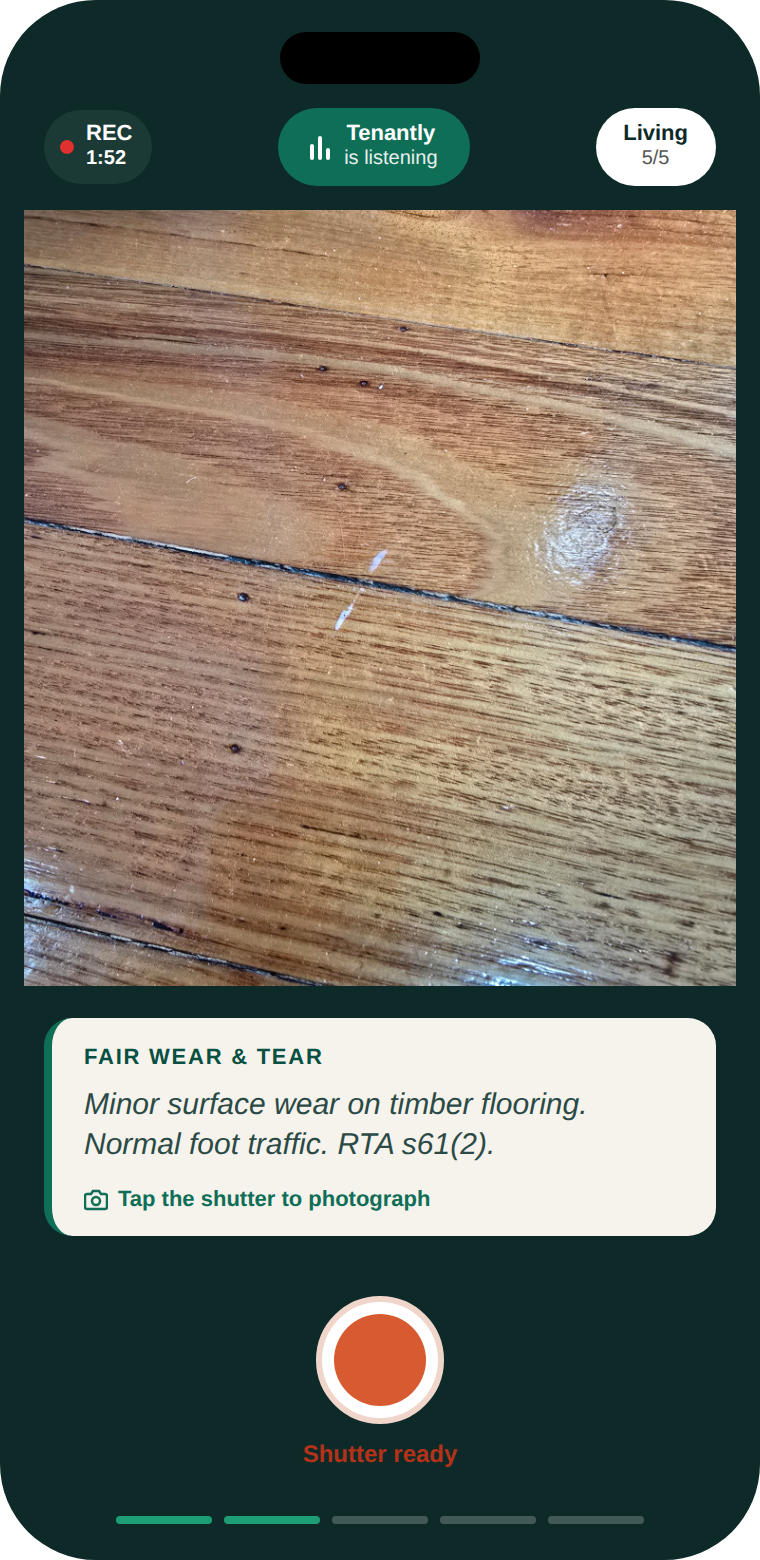
Your bundle cites it line by line. Settlement cracks? Not damage under RTA 1997 s61(2). Pre-existing grime at move-in? Cleanliness duty under s63 is “reasonably clean, taking into account the condition at the start” — not restore-beyond-move-in (CAV Guideline 3). Minor surface wear on floors? Fair wear and tear, excluded from damage by s61(2).
One flat fee — $249 per bond, per dispute event. If your recovery is less than $249, we refund the fee.
Four examples of what a renter captures in minutes on move-in day. Every capture cites the relevant section of the Residential Tenancies Act 1997 (Vic).
Baseline documented at move-in, so the agent can't claim it on exit.
Pre-existing at move-in — the renter is not responsible.
Settlement cracks are not damage under RTA 1997 (Vic) s61(2).
Normal foot traffic on timber isn’t damage under RTA 1997 s61(2). CAV Guideline 3 applies.
Free forever to capture. Subscription support through the tenancy, only if you want it. One flat fee at the dispute moment — refunded if it doesn't recover.
Move-in capture, transcription, and your timestamped PDF condition report.
Act-grounded support across your tenancy. Every email, deadline, and maintenance issue in one record.
Tribunal-ready evidence bundle with Act citations and drafted application. Universal — any tier, any time.
Free apps stop at the checklist — they hand you a blank form and ask you to fill it in. Tenantly uses AI to do the work: transcribe your walkthrough, flag the damage, draft the emails, compile the tribunal bundle.
Feature comparison based on public Bondinator listings and direct inspection of v1.3.42 as of April 2026. The core Tenantly walkthrough is free — you only pay when the evidence is working for you.
Victoria launches first. Your spot in the NSW, QLD, and WA expansion queues starts here. The first 100 renters in each state shape what Tenantly becomes.